Saturday, 17 January 2009

My Published Images

Here's a gallery of my published images, my me wall if you like...

Sky at Night November 2008 - Cover CD

Iridium 63
Photobucket

Sky at Night December 2008 - Cover CD

Double Flare
Photobucket

Sky at Night January 2008 - Cover CD

M52 and Bubble Nebula
Photobucket

Sky at Night April 2009 - Cover CD
Photobucket

Sky at Night June 2009 - Cover CD
Photobucket

Sky at Night July 2009 - Cover CD
Photobucket

Sky at Night August 2009 - Printed Hotshots in the magazine
Iridium 65 - Mag -5

Telegraph Online - AstroPhotographer of the Year competition press release
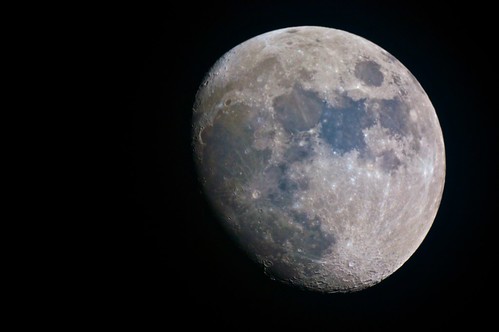
Colourful Moon

Friday, 14 March 2008

Tale of an Astronomer

Each day as the day dawns bright and clear
The Astronomer, ever eager to view the glories of the heavens
Hopes that the clear skies will hold.

Each evening as the sun descends it's heavenly track
and the skies begin to darken
He's there at the window checking to ensure
That the view to the sky is clear

As evening wears on, the jobs at home complete
One final check out the window is done
Yes, the skies are clear

With uplifted spirit of the joys to behold
He gathers together his Optical tools
reference works and protection from the cold

Out into the night, wrapped up tight
He sets out all the gear
to prepare for a night of fine viewing of
Heavenly Objects of wonder

The mount is leveled first,
then the scope aligned
All ready to go, all lights off, heavenward he stares

As his eyes adjust, the scope has cooled
he's ready now to begin
to hunt for dim and distant things from millions of years ago

In the darkness, sights appear in the telescope
Great nebulae and Galaxies
Are found and studied more
Each one giving a new found lift as his spirit starts to soar

Then onto open clusters, Diamond stars sparkling clear
Spreading their patterns across the view
The Seven Sisters and the Beehive

Falling headlong into the well of stars
Revealed in this tube of wonders
Gathering light from far afield
Lifting him in flight

As night wears on, more objects seen
The study continues on
The moon appears and beckons forth
As she washes the skies with light

So on he goes and studies she, that hovers o'er the night
The filters placed in the path to cut down her dazzling light

And what a sight she makes, this nearby heavenly partner
As she dances onward in her monthly path

Craters and Mare upon her face reveal the passage
Of times great dance
Throughout the planetary system of our small region

After hours of watching her startling face
and noting down craters and features
He moves on to one final sight of the night

A stunning queen in her own right
So near yet far away crowned in a halo of icy rings
Saturn supports the king of beasts

Below mighty Leo there she sits
with attendant moons circling bright
A wow, A gasp is always heard, when she comes in sight

Many a moment is spent
watching this astonishing sight
as flickers of more detail leap and dance
as seeing moves the night

Noting all the wonders seen to share with others once all is done
the wondrous night has faded with dawnlight glimmering
Tired and cold yet feeling able to fly
He gathers up the tools of the night
and climbs the stairs to bed.

Tuesday, 26 February 2008

New Atlas of the Moon - 26 Feb 2008

I recently purchased a copy of the New Atlas of the Moon by Legault and Brunier as an aide to working my way through the Lunar 100 and locating objects on the Lunar surface. First off, the construction of the book is great for use outdoors, at night. The pages are ring bound so flip easily, yet the book doesn't fold shut on it's own. The pages themselves are of a form of glossy plasticised paper so should resist dew better than normal paper. One point of note, the big is large (the binding is 36.5 cm or nearly 14.5" {in old money} tall so will need a tall bookshelf to rest on for during the day and those cloudy nights.

The first section of the book is broken down into a day by day view of what can be seen on the surface with the movement of the terminator. Each day contains an image indicating the approximate view using the eye, binoculars and a widefield scope. Detailing, also the best viewing times throughout each day. This also shows the orientation through different types of optical instruments whether using a diagonal or multiple mirrors, which is a massive boon. The main chart on most days, also has a clear overlay highlighting the main features visible around the terminator.

The second section goes into more detail on some of the major and/or more interesting surface features giving an indication of the sorts of instruments required to view effectively be they binocular, small scope or large scope, and an indication of what you can expect to see through them. This section contains detailed images at high magnification of the various features which has the benefit of helping in the identification.

There is then a short section detailing Lunar motions. This section is broken down into a number of subsections, going into a lot of detail on how the moon moves in relation to the Earth. Quite a large section on Eclipses, guidance on how to observe and what can be expected to be seen. This includes some information on Lunar occultations.

The book then moves onto a practical guide to the moon, what to expect with different equipment, and a very useful set of explanations on magnification, Aperture, mounts and resolving power. And going into some detail on how best to observe the moon. This is followed by a brief section on Lunar Photography.

Finally there is a section of calendars up to 2010 showing information on Lunar phases and eclipses with a brief glossary of terms.

This is going to be a very useful book for me, aiding in my lunar observations. By having the daily charts with overlays and orientation indicators I'll find locating objects significantly easier as I won't be struggling with comparing the differing views from the charts to the eyepieces. The detail on what I can expect to see through my scope is also going to be invaluable at solving the dilemma of whether I have actually seen a target, or just wanted to see it so badly, I've convinced myself I have. In fact, already, this has convinced me that some of the tougher objects I've marked off on the Lunar 100 I have in fact seen.

In conclusion, I'd recommend this book to anyone starting out in observing our nearest neighbour as a valuable resource for locating and finding there way around the surface features.

Monday, 25 February 2008

Messier Objects Seen

M1
M3
M5
M13
M27
M29
M31
M34
M35
M36
M37
M38
M39
M41
M42
M43
M44
M45
M47
M48
M50
M51
M52
M53
M63
M64
M65
M66
M67
M81
M82
M93
M94
M103
M106

Wednesday, 6 February 2008

Wish List - in no particular order

Skywatcher HEQ5 Mount
Astro Engineering AC562 AZTech Slow Motion Mount for grab and go
WO Megrez 90 or WO Megrez 72
Skywatcher 8" Dob
Modded Philips SPC900 webcam - Will have to look into the LX mod for this.
More Hyperions
Celestron Ultima x2 Barlow
Tal x3 Barlow
5" Mak or 6" SCT

Wednesday, 30 January 2008

Stargazing with Binoculars - A beginners review - Written 19th December

I recently got started with Astronomy, after many occasions gazing upwards wondering what I was looking at. After reading many posts on various forums, I invested in a cheap pair of binoculars and started looking around. At this point a generous chap sent me a copy of the above book to help get me started.

The book starts out with a quick introduction about the benefits of binoculars for Astronomical use and indicates that rather than being just a poor mans telescope they actually have a very useful place in the kit of most astronomers. Continuing with useful hints on how to use and locate objects in binoculars, (whilst this might sound easy, to a beginner, not used to looking at star's and other objects that leap out when using an optical instrument, it can be very tricky) and that sometimes, binoculars need mounting to.

There is then a short section about learning the sky, and how the view changes over time. The authors have provided some low detail star maps, showing the main constellations looking north and south for each month of the year from both the northern and southern hemisphere. The maps have a simple guide in how to use them and what to look for and have been taken from Stellarium. There is also a brief synopsis on the naming conventions for stars within a constellation starting from the brightest.

The book then proceeds to provide some specific targets that can be found using binoculars for each month of the year, and usefully for a beginner, an indication of what you might expect to see through your binoculars when looking at each object, both as photo's and sketches. The monthly guide contains targets for both northern and southern stargazers, so I will admit that I skipped some of the objects I realistically have little or no chance of seeing in the near future. The guide is also interspersed with useful informtion about the types of objects seen and how they are created, when they are mentioned in the text.

There is a guide to the solar system, including a warning and information about being very careful if the sun is to be viewed. The book contains a simple guide to targets on the moon and what to expect to see. The planets are also covered in less detail with best times and locations in which to see them over the next few years. There is also a brief section on Asteroids, Meteors, Comets and Satellites.

There is a pretty comprehensive section on Binoculars in general, what the terms mean, what are considered to be useful for Astronomy etc. This section goes into quite some detail on the different types of Binoculars, how to choose a pair, what to look for when choosing a pair, guidance on determining if a pair that you are interested in is good or has a defect within the mechanical or optical systems. There is a list of some Binoculars with an approximate price bracket for each (no detail, but rather comparing to other retail items, such as small compact digital cameras etc).

The book concludes with details on how to use Binoculars effectively. Starting with the basics on setting up for interpupilliary distance, focusing, setting the dioptre setting and so on. There are details on the various mounting methods, be that on a tripod or using a fence as a quick rest, backed up by example photographs showing how others have used Binoculars. There is a secion on solar viewing, this has warnings about how dangerous this is without taking suitable precautions, and then proceeds to detail a number of options for viewing safely. The book concludes with a section on the magnitudes that you can expect to see with various binocular sizes, suggestions on sketching what you have observed and some guidance on estimating the field of view.


All in all, I found this book to be a very useful and informative guide to get me started. The expectations of what can be seen are clearly set out, therefore as a beginner, there is less likely to be big disappointment, when looking at the Orion Nebula say, and only seeing a few wisps as opposed to some of the glorious photographs that have been taken. The details on how to find your way around the sky, the objects to look for each month of the year and how to mount/steady the binoculars for viewing are extremely useful. The book is also small enough that it can be used as a pocket guide in the months to come.

I would recommend this as a very useful starting point to anyone looking to start Astronomy as a hobby, as by combining this with a normal pair of Binoculars will get someone up and running without a significant outlay of expenditure, enable someone to experience the sense of satisfaction at finding soemthing that you just can't see with the naked eye, and help learn their way around the night sky and what the beginner would most like to look at before taking the plunge and deciding on which scope to invest in. Equally, as the book starts out, the Binoculars are going to stay with you even when you have really expensive equipment so this, in my opinion provides a solid grounding for moving forwards.